
18F-Radiochemistry for Positron Emission Tomography
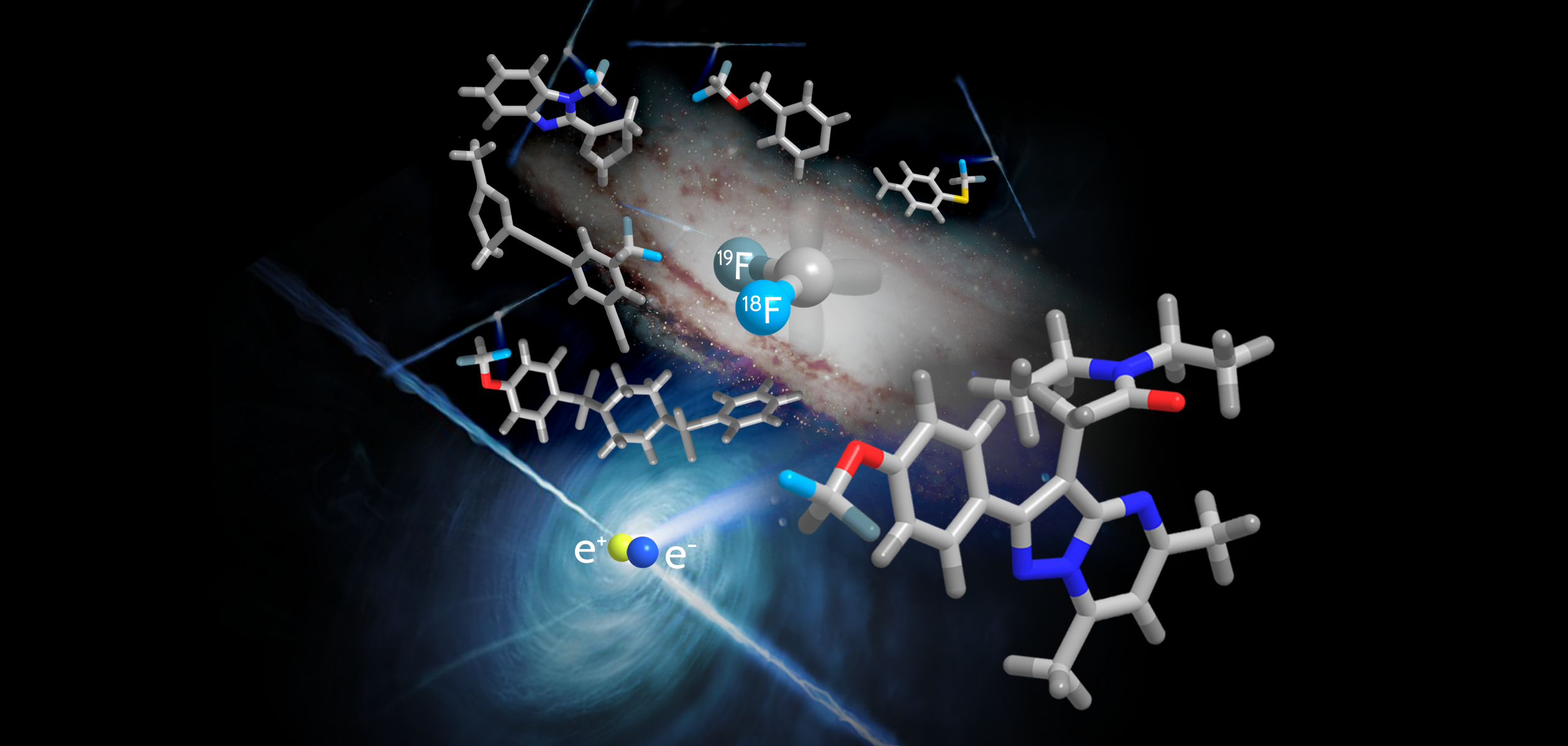
The Gouverneur laboratory has invented methods for the incorporation of the cyclotron-produced radioisotope F-18 into small molecules and peptides for applications in Positron Emission Tomography Imaging. Highlights include (i) novel 18F-labelled reagents for (asymmetric) 18F-fluorination (ACIE 2011), 18F-difluoromethylation (ACIE 2015) and 18F-trifluoromethylation (Nat. Chem. 2013, JACS 2018, JACS 2020), (ii) a Cu-mediated 18F-fluorination of arylboron reagents with readily available [18F]fluoride, a method used by radiochemists in PET centres worldwide (ACIE 2014, JACS 2017), (iii) difluorocarbene chemistry for accessing [18F]trifluoro(hetero)arenes from aryl iodides and [18F]fluoride (Nat Chem 2013), (iv) a pyridinium-mediated 18F-fluorination SNAr method of (hetero)anilines (ACIE 2024), (v) a photoredox nucleophilic (radio)fluorination using TEMPO-derived alkoxyamines (JACS 2024), and (iv) the radiosynthesis of [18F]difluorocarbene and its application to insertions, cycloadditions and cross-coupling reactions (Nature 2022). These 18F-fluorination methods enabled the automated production of [18F]Olaparib, [18F]Rucaparib and [18F]Flumazenil currently undergoing (pre)clinical studies. With Prof. B. Davis and Prof. D. Anthony, she launched the new initiative OXIME (Oxford Molecular Imaging Epicentre). This research hub, equipped with state-of-the-art equipment, aims at inventing the next generation of PET radiotracers to investigate cancer biology, brain and heart function, and to support diagnostic and drug discovery campaigns.

Image
Image